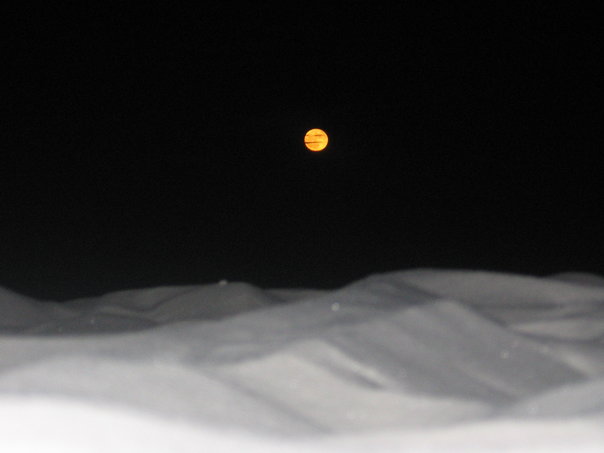
Rising moon over White Sands

Astronomy 105 Lab Section

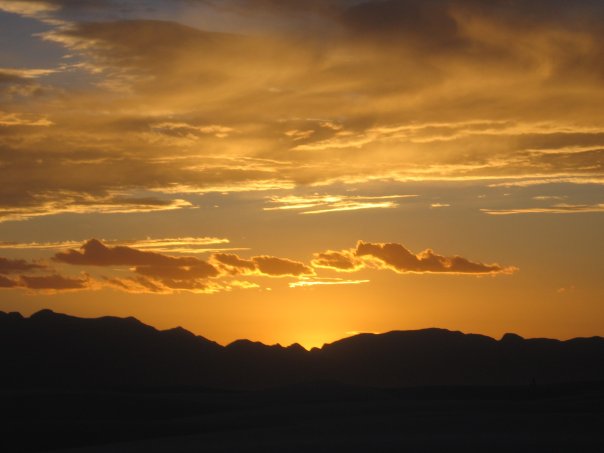
New Mexico Sunset


Instructor:   Sean Lindsay
Email:   slindsay@astronomy.nmsu.edu
Office:   Astronomy Building #209
Office hours:   11am - 12pm Tuesdays.
Phone:   646-7724

Lab Policies
  • Your attendance in lab is required, and is considered for your final grade. Recall that the Labs are worth 20% of your overall grade and there are 13 of them. This means that every lab you miss will lower your final class grade by a minimum of 1.54% per missed lab, and from experience that small percentage could easily make the difference between a letter grade line (A or B, B or C, etc.). Excused absences are fine, but they need to be accompanied with a doctors note or some other form of official documentatoin. If you can let me know before the lab class time that you need to absent (sometimes things happen like needing to pick children up from school, family emergencies, and the like), that is preferable, and we'll come to an agreement on how to handle the missed lab grade. As of now, there are no scheduled make-up labs, so this will probably be in the form of inserting the average of all your other lab grades.
  • Attendence is taken with a notecard question. This requires you to have 3x5 Notecards, and the question is usually just a silly question just for us to have some fun, but if I become generally disgruntled at performance in labs, I might make it something more official. This has never happened in the past, but don't push your luck.
  • Labs are due one week from when they are assigned. Late labs will be penalized up to 10% for each day that they are late.
  • Each group must turn in one copy of its in-lab work, and each individual must turn in his/her own take home section. Any instances of plagiarism will earn a zero for all parties involved.
  • I am currently teaching two sections of this lab (1:30 and 3:30 on Tuesdays). If you must miss your scheduled lab time, let me know if you can attend the other lab. In some instances (i.e. with proper notification) it should also be okay to attend Cat Wu's monday section of the lab. If this is the case, let me know, and I will inform Cat.
  • I also am not a fan of cell phones ringing during my lab. So, either turn off your phone, or put it on vibrate and hope I don't hear the buzzing. In cases of repeated cell phone noise offenses, I reserve the right to answer the phone for you, and believe it or not, most of the time the person calling turns out to be one of your parents. Rampant texting migth result in me 'borrowing' your phone for the remainder of lab.

Hints for Success in Lab
  • Know how to use your calculator! Most errors made in labs are a result of calculator-student-error. This usually happens with division. While you might implicity know that when you divide a quantity by 2*pi, you are dividing it by the quantity two times pi, the calculator will require you to put 2*pi in paranthesis (i.e. Quantity/(2*pi)... NOT! Quantity/2*pi. The later case here will divide the quantity by 2 and then multiply that result by pi).
  • Be on time. I will typically begin each lab by running through the methodology of how to do the lab. I often even give you a few answers, if you are paying attention. If you miss this intro, I might have time to give you a quick run through of the lab, but most likely, you'll have to pester your lab group for the information.
  • Count Question Marks The questions in the lab and lab takehome usually ask you to answer more than one thing. For example, a question might ask you to provide a few facts, and then explain how they are linked together. A good rule of thumb, is to see how many question marks there are, and provide an answer for each one that you count.
  • Be interactive/Ask Questions Some students in the past have complained that I tend to favor one group over another. This is not the case, but rather, some groups tend to ask more questions than others, and I will go to where the questions are. If you notice that you have your hand raised, and I have not noticed, just yell at me, and I'll mosey on over in your direction as soon as I can.
If you have any questions about lab, class, astronomy in the news, or anything else, don't hesitate to ask me!   You can come see me during office hours, talk to me after class, send me an email, give me a call, randomly stop by my office, or (of course) pester me during lab.

LABS
  • Lab 1: Math Review: This lab, while a bit tedious, is designed to build up/refresh mathematical tools you've learned in high school that will be important to the rest of the labs. It's basically practicing all the math tricks you'll need to know for the labs and class. Points to pay atttention to are: How to convert units; Understanding how to convert from a distance on a map to a real distance using a provided scale; How to determine if your answer makes sense or not. This means if you calculate the radius of the Earth to be 0.837 kilometers, you know that you made a mistake somewhere because that distance is shorter than a mile, and you know that the radius of the Earth must be a lot bigger than that. Note: There is no take-home portion for this lab.