What will the airmass for this object be 3 hours later?
For star at declination of 10 degree on the meridian at APO, zenith distance
is  22 degrees, so airmass is 1.08. Using
 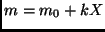 ,
you need to correct by 0.22 mag, or increase the flux by a factor of 1.22.
,
you need to correct by 0.22 mag, or increase the flux by a factor of 1.22.
You want to find stars that are at relatively low airmass (to minimize
extinction and differential refraction). Since hour angle = local
sidereal time  right ascension, choose stars with RA near the LST
at the beginning, middle, and end of the night. To avoid losing light
as a function of wavelength, you want to align the slit pointing
towards the zenith, in other words, align it along the parallactic
angle. You can determine this from the equation given in class, or
use, e.g., the skycalc program.
right ascension, choose stars with RA near the LST
at the beginning, middle, and end of the night. To avoid losing light
as a function of wavelength, you want to align the slit pointing
towards the zenith, in other words, align it along the parallactic
angle. You can determine this from the equation given in class, or
use, e.g., the skycalc program.
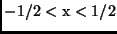 and zero elsewhere) is the sinc
function. Imagine that I have several such rectangle functions defined
on the x-axis, in total 7 in a row, the first one starting at x= -6.5,
the last one ending at x=+6.5 (so f(x) = 1 between x=-6.5 to -5.5,
then 0 to x=-4.5, one to x=-3.5, etc). Using the connection between
Fourier Transforms and convolutions, in particular the Convolution
Theorem, it is easy to write down what the FT of this function will
look like. I don't need the answer in terms of one analytic function,
just an analytic expression of products and convolutions of particular
functions that will give the answer.
and zero elsewhere) is the sinc
function. Imagine that I have several such rectangle functions defined
on the x-axis, in total 7 in a row, the first one starting at x= -6.5,
the last one ending at x=+6.5 (so f(x) = 1 between x=-6.5 to -5.5,
then 0 to x=-4.5, one to x=-3.5, etc). Using the connection between
Fourier Transforms and convolutions, in particular the Convolution
Theorem, it is easy to write down what the FT of this function will
look like. I don't need the answer in terms of one analytic function,
just an analytic expression of products and convolutions of particular
functions that will give the answer.
Also make a sketch of what this FT will look like.
This function can be written as follows:

The FT of this can be easily derived following the various theorems. The FT of

and hence the FT of

which is a sampled sinc function convolved with a rapid sinc function.
Your exposures will always be sky noise limited since your object is much fainter than the sky. In this limit, readout noise is unimportant because it is swamped by photon noise from the background. Consequently, you want to choose the device with the higher quantum efficiency, namely, the InSb device.